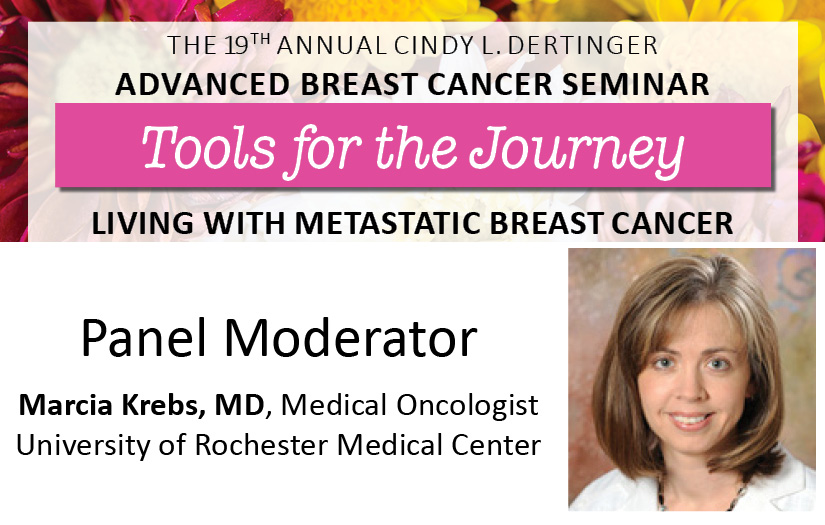
(From Breast Cancer Coalition of Rochester, October 2022. Image no longer available online).
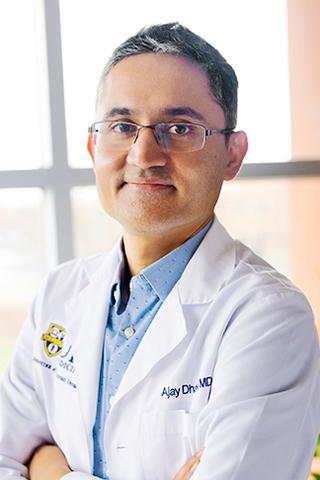
I attended this Zoom seminar (October 13, 2022, 1:00 p.m.) and listened to all the presenters — including Ajay Dhakal MBBS as he outlined current therapies for women with metastatic disease. The moderator introduced him as “someone who delivers personal care to his patients.”
Well, as a victim of that “personal care,” I wanted to hear what he had to say.

His Power Point presentation consisted of treatment statistics cropped from a couple of textbooks. I found them interesting, but I wonder how much they might or might not influence his treatment plans, since the “personal care” I received from this man was devoid of statistics. He clearly ignored the ones that define the presenting symptoms of typhlitic patients as well as others that predict their shockingly low survival rates. So, how would statistics help him devise appropriate medical regimens when he ignores the ones that interfere with his “personal care?
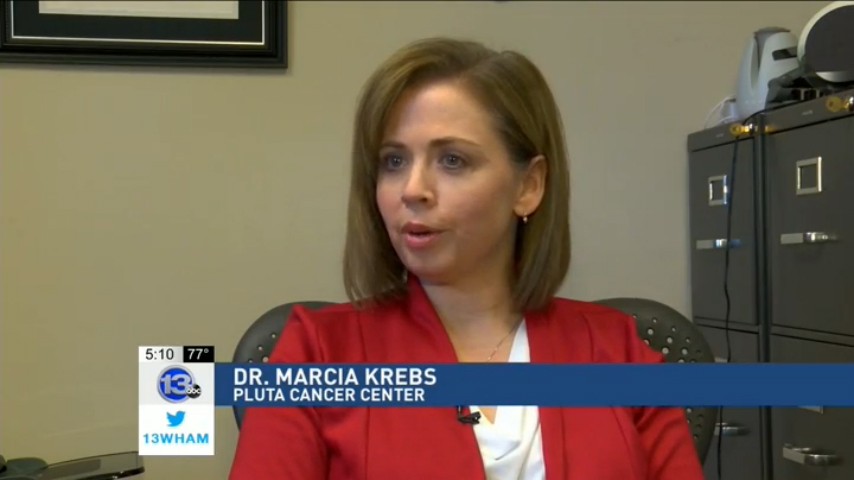
(From https://13wham.com/health-matters/gallery/battling-breast-cancer-is-personal-for-local-doctor-11-09-2015-184350835?jwsource=cl), October 2022)
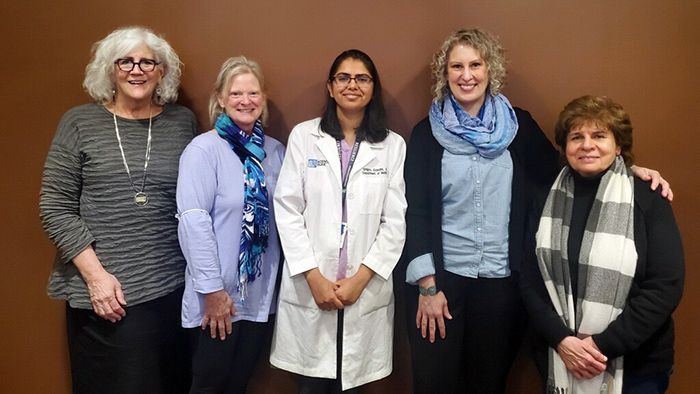
The moderator of this conference, Marcia Krebs, MD, is the Chief of Medical Oncology over at Pluta Cancer Center. As such she should be quite familiar with Dr. Dhakal’s “personal care.”
She gave a short speech in which she disclosed her own breast cancer diagnosis.
I wanted to ask her some questions.
However, I was unable to do so since I was removed from the meeting during the Q&A period. Not surprisingly, an emailed query to Holly Anderson, director of the sponsoring organization (Breast Cancer Coalition of Rochester), remains unanswered.
(From https://bccr.org/wp-content/uploads/2022/06/Summer-2022-Newsletter-web.pdf)
So, I sent my questions to Dr. Krebs herself. After establishing my history, I asked her this:
- Would someone who is unable to complete chemotherapy secondary to typhlitis be at increased risk for her breast cancer to metastasize?
- Since many of the current therapies carry the possibility of intense GI side effects, would the post-typhlitic patient who is missing a significant portion of her lower GI tract be precluded, should the need arise, from receiving such therapy?
- As a practicing oncologist, would you consider fever of 103, sudden onset of severe abdominal pain, and/or fecal vomitus typical of the unpleasant but non-life-threatening side effects of taxane chemotherapy?
She, too, has not replied.

She isn’t the only one to ignore me. I had expressed essentially the same concerns to Dr. Dhakal at my first post-typhlitis followup appointment back in May 2021 — which was also my last. He simply brushed them off: “You’re 70 years old,” he said, “you’ll be dead in a few years anyway.”
That clinched things for me. I was outta there. I wish he had explained at our initial visit how his “personal care” is not wasted on his older patients — I would have immediately sought treatment elsewhere, and this entire typhlitis thing may never have happened. . .but if it did, it most certainly would have been promptly and accurately diagnosed.
But he didn’t, so it did, and thank goodness I now see a real doctor who agrees that I still have a few miles left in me and treats me accordingly, despite (or maybe to spite?) Dr. Dhakal’s callous, near-fatal “personal care.”
In any event, Dr. Krebs’s continued silence does nothing but prove my point. Through it, she embraces and excuses Ajay Dhakal’s blatant incompetence, which has inter alia limited my disease-free future. Furthermore, it carelessly and audaciously indicates her complete agreement with his flippant dismissal of my questions, which remain just as legitimate now — and just as ignored — as they were in 2021.
However, this begs a final question:
- Does Dr. Krebs trust Ajay Dhakal to treat her own disease?

She need not respond, I knew the answer before I even posed the question. Because despite all the protection and support he gets from the medical (and legal) community, the fact is that Dr. Dhakal has been neither re-educated nor disciplined. Who wants to risk undergoing his dangerous “personal care?” — certainly not other doctors! Clearly, they stay away from him for a reason.
It horrifies me that these women who (I assume) are otherwise intelligent and (I hope) compassionate would opt to protect a dangerous doctor with their silence rather than support his victim, especially when they themselves decline his “personal care.”
Or, most likely, victims! With an “s“! I am probably not his first and I certainly don’t expect to be his last. As long as he is held harmless from his substandard conduct, he has no incentive to improve it. None whatsoever.
There is no way to know how many patients he has victimized with his “personal care,” but I am proof that even one is one victim too many. And whether one or one hundred, NONE of them deserve the bias and anger that has been directed toward me simply because I (rightfully) warn the public about a doctor so dangerous that he can kill — or nearly kill — his patients while the hospital that employs him profits thereby. No one deserves to be treated like that — and that, Dr. Krebs and Ms. Holly, includes ME.
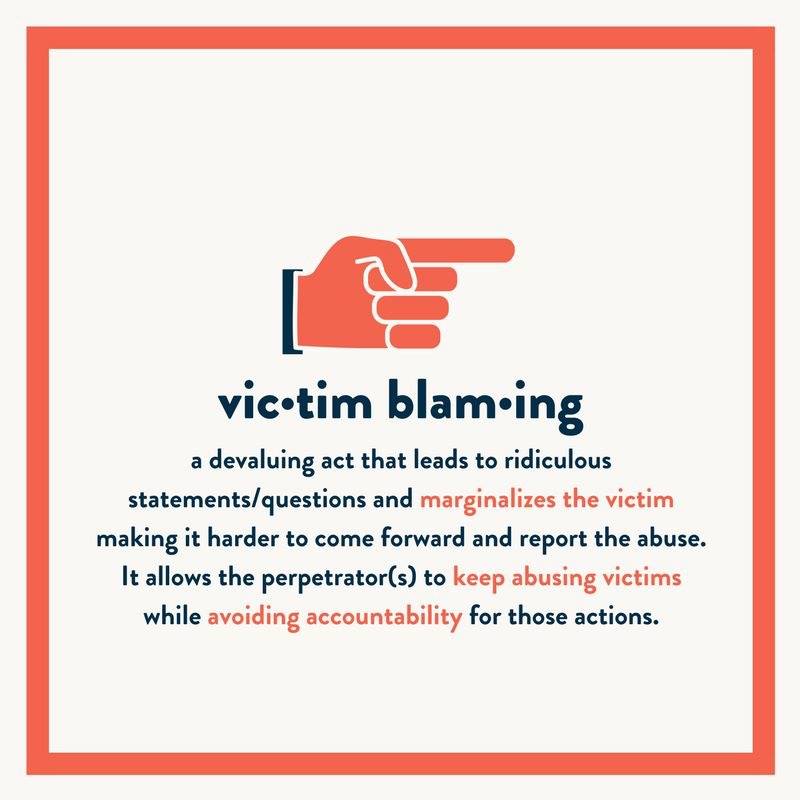
Have you no shame??
ADDENDUM, October 15, 2022: I did indeed receive a response this day from Holly Anderson, Director of the Breast Cancer Coalition of Rochester — but only AFTER she read this blog essay. Her vitriolic reply accuses me of being. . .well. . .vitriolic.
She claims that she does not “support” Dr. Dhakal, but the entire email confirms that she does. She finds my “hate-filled” and “disparaging,” reports of his conduct intolerable because he has successfully treated “hundreds of patients.”
My comments are confirmed by experience. Hers? Mere supposition.
She continues by dismissing “your experience” simply because it is “YOUR experience.” Therefore, it is a nonissue, unworthy of discussion. Oh, she has made her point — since my “experience” affected only me, so she doesn’t care and Dr. Dhakal doesn’t care; therefore, neither should I.
She advises that “no one is suggesting you forgive this physician (or forget)…” What a waste of words! Who can forget being nearly killed? Why even think about forgiving a careless and incompetent doctor who believes he needs no forgiveness? But that, too, is a nonissue. The only real issue, the one that prompted her ugly tirade, was my public discussion of it. She simply will not tolerate my posing questions to Dr. Krebs, telling my story on the ‘net, and/or warning other women of Dr. Dhakal’s dangerous “personal care” because such talk “disparages” and “blacklists” a doctor who has treated “hundreds of patients.” Instead, she hopes that I get over “your horrific experience” by remembering the excellent, life-saving care I received from “another of your physicians.”
(She is mistaken. I didn’t have “another physician” waiting in the wings to rescue me. I received that care in the emergency room — from residents, who were able to promptly and accurately diagnose me in minutes, something Dr. Dhakal either couldn’t or wouldn’t do over several days.)
In any event, what Holly doesn’t realize is that I do remember that excellent, life-saving care — I remember it took four (4) surgeries, three (3) hospitalizations, and Sixty-three Thousand Thirty-eight Dollars and Six Cents ($ 63,038.06). And that does not include ostomy education and care or the physical therapy I required.
I remember it when I suffer debilitating nausea and/or double over with crampy abdominal pain, which sends me running to the bathroom q.10m as my shortened bowel tries to rid my body of something it can’t process.
I remember it as I force-feed myself fluids when blood work reveals dehydration and electrolyte imbalance as the cause for my feeling so unwell yet again.
I remember it whenever I struggle with compression stockings, which I must wear on those days when my shortened bowel can’t handle fluid intake. Otherwise, edema will build up in my feet and ankles.
Actually, it’s hard to forget that excellent, life-saving care and “this physician” who made it all possible.
Ironic, isn’t it, how none of that excellent, life-saving care — and its difficult and expensive aftermath — would have occured had Dr. Dhakal diagnosed me promptly and correctly rather than asking me to “wait 4 days” while he posted Facebook comments about the tiger population in Nepal. Apparently none of this fits the Holly Anderson narrative, which might explain why she fails to acknowledge it.
I shudder to think of the “hundreds of patients” Dr. Dhakal treats — how many of those hundreds has he sickened and nearly killed? Or actually killed? How many are afraid to speak up due to reactions like Holly’s and Dr. Krebs’s? How many new patients will he endanger in the future?
But I digress.
If I strip the anger and accusations from her diatribe, I see that “Holly Anderson, M.D.” has it all figured out. She has cleverly diagnosed my illness as causa sui: “wallow[ing] in your horrific experience,” which is why I “remain miserable.” But no worries! She prescribed a simple (and free!) curative:
Stop talking about it.
Shut your mouth.
Put a sock in it.
Nolite loqui.
Dummy up.
Zip it, stuff it, stifle.
Say nothing. . .
. . . because talking about it is so unfair to Dr. Dhakal.

Of course, she didn’t actually tell me to shut up. Instead, she tells me what to do without actually telling me what to do:
“CHOICE.”
Although she believes “you have a multitude of choices to make here,” she presented only two: I can either speak up (which causes Dr. Dhakal to suffer) or I can be silent (which causes me — and possibly other women — to suffer). I don’t have to forget what happened or forgive “this physician” — all I have to do is make the right “CHOICE.”
In her oversimplified opinion, never speaking about “it” to anybody ever again is the only way to “put this experience behind you and move forward.”
It’s as if my “horrific experience,” much like the Wicked Witch of the West, will melt into nothingness if I throw a bucketful of the right “CHOICE” on it. By persisting with the wrong “CHOICE,” though, I condemn myself to “remain[ing] miserable,” possibly forever! It’s only the right “CHOICE,” she promised, that I can “enjoy a peace-filled, joy-filled life.”
And so can Dr. Dhakal.
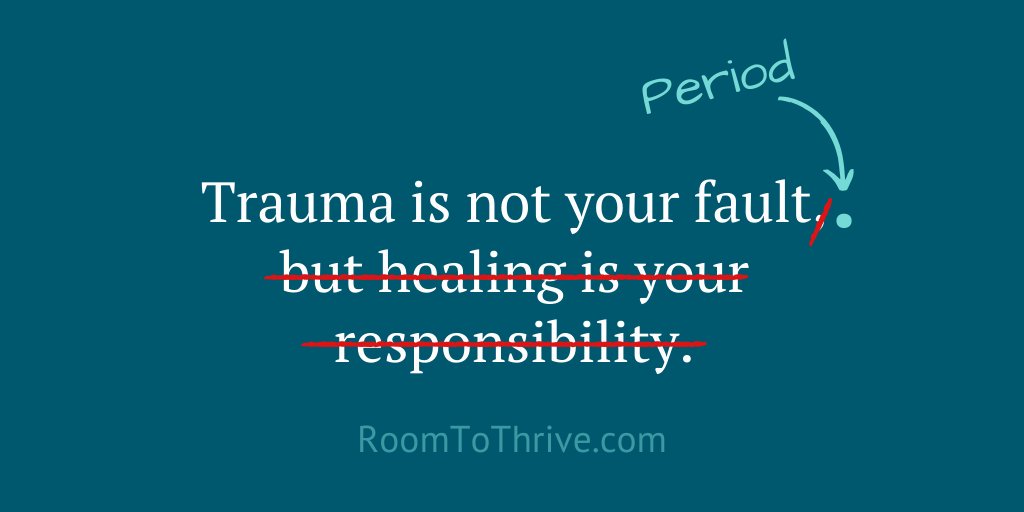
It’s all up to me. All I have to do is shut the f*ck up.
Easy-peasy, no?
. . .in her world, maybe. That’s not how it works in the real world, though, which is where I live. In the real world her strategy is called protect-the-perpetrator-by-blaming-the-victim. That is how you guarantee a “peace-filled, joy-filled life” — but only for the perp. Not so much for the victim.
I’d like to know if she actually believes her own facile synthesis of events that she has neither observed, experienced, nor examined fully. Is she from another planet? Was she dropped on her head as a baby? Is she on drugs? Is she on drugs after being dropped on her head as a baby while living on another planet?

Regardless, her email unwittingly but clearly addresses the question of shame. Her answer? A resounding “no.” She has no shame. Absolutely none.
Dr. Krebs’s own contempt and disrespect is confirmed by her continued silence. However, she is wise to remain away from the keyboard lest she, too, expose her own lack of shame. Her complicity in supporting Dr. Dhakal is simply another brazen example of victim-blaming that allows an incompetent doctor to avoid accountability while he blithely continues “practicing” <—– and I use the word literally —–> on unsuspecting patients. That she declines to be one of them speaks louder than any message she might otherwise convey.
ANOTHER ADDENDUM, October 19, 2022: This day I received a hand-signed “thinking of you” card from the staff at the Breast Cancer Coalition of Rochester — Holly Anderson, director.
Who’da thunk it.

The return address did not disclose the sender’s identity. However, as soon as I realized who it was I tore it into tiny pieces, envelope and all, and threw it away . . . and then washed my hands with hot, soapy water for a full 30 seconds (singing Happy Birthday 3 times = 30 seconds).
Because I was afraid I might have gotten some of it on me.
You’d think they’d have the decency to leave me alone, which is what I reasonably expected back on the 15th when I asked Holly to “take me off your email list.”
My bad. I expected too much.
So, here is a message for her and her entire BCCR crew: Quit sending me your phony-baloney, sippy-sappy cards. I know exactly how you are “thinking of [me]” — it is clearly stated in Holly’s vituperative electronic message. That she/they would feign compassion and caring only 4 days after sending that email is nothing but mendacious and contemptible. Or maybe someone over there is bipolar, I don’t know. In any event, it’s a waste of a card, a stamp, and my time.
You, Holly Anderson, should never be allowed to counsel any cancer patients — or anyone else who has suffered trauma of any kind. You are a fraud. You have absolutely no shame and no sense of decency. And neither do the cowardly coworkers whose arms you twisted until they signed that bogus card.
YET ANOTHER ADDENDUM, January 13, 2023: Just when you thought it was safe to go out to the mailbox. . .

. . .THIS shows up in it:
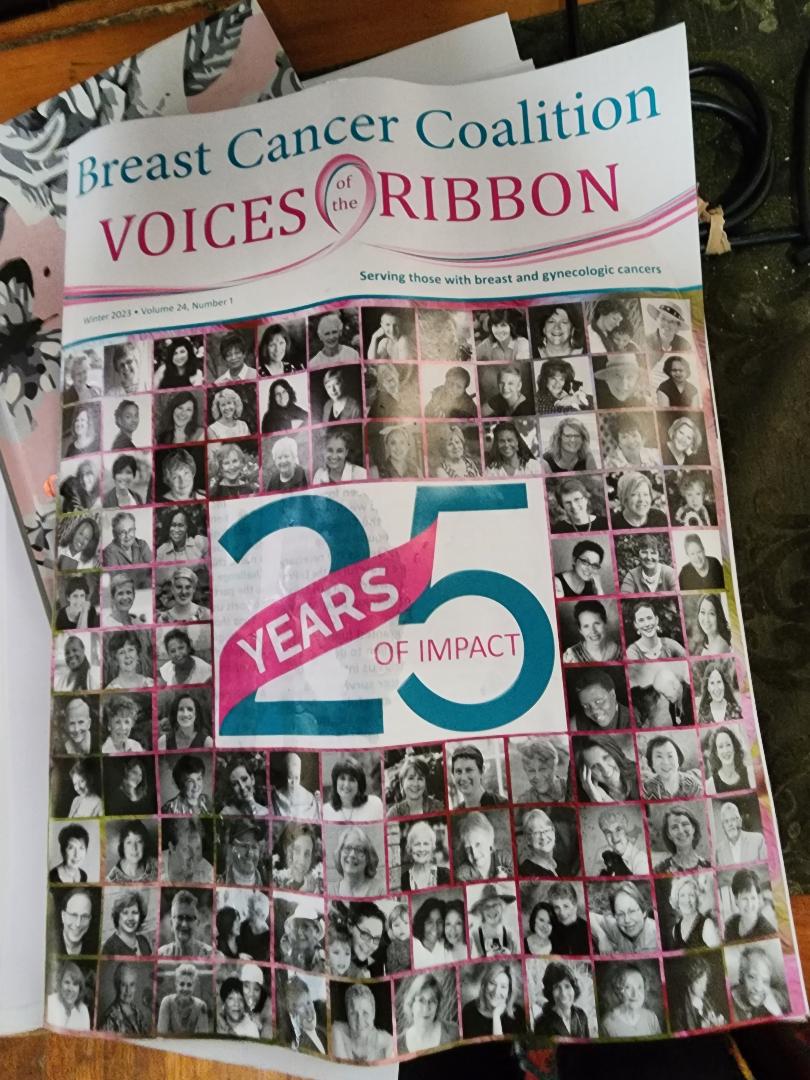
I don’t know what part of “LEAVE ME ALONE” confuses Holly Anderson. It’s a simple directive and stated so clearly that even those possessing only the meanest level of intelligence can easily understand it.
Somehow, though, she doesn’t get it. Because I am still on her “list,” (and I don’t mean her email list).
When I brought this unsolicited junk to the post office for return to the sender I couldn’t help but notice “25 Years of Impact” splashed across the cover. Well, I know all about the impact Holly Anderson has had on at least one of the women she has counseled. As far as I’m concerned, those 25 years belong in the toilet. They were put there by Holly herself the minute she decided it would be a good idea to support a breast cancer survivor by defending the incompetent doctor who almost killed her and then dismissing that “horrific experience” as a nonissue that should never be mentioned. . .because it is so unfair to Dr. Dhakal.
And she preserved that counsel in the electronic firmament, just in case I forget.
If I understand her correctly, the near-death I suffered at the hands of “this physician” should never be mentioned. Ever. Because she is sure that it happened to me and only me; therefore, it just doesn’t matter.
And by virtue thereof, neither do I.

Sorry, but I’m not interested in that kind of “support.” In fact, if given a choice, I’d rather eat glass. Or do my own root canal. Or bathe in nuclear waste.
But I do want her to leave me alone.






















 Beat Breast Cancer
You must be logged in to post a comment.